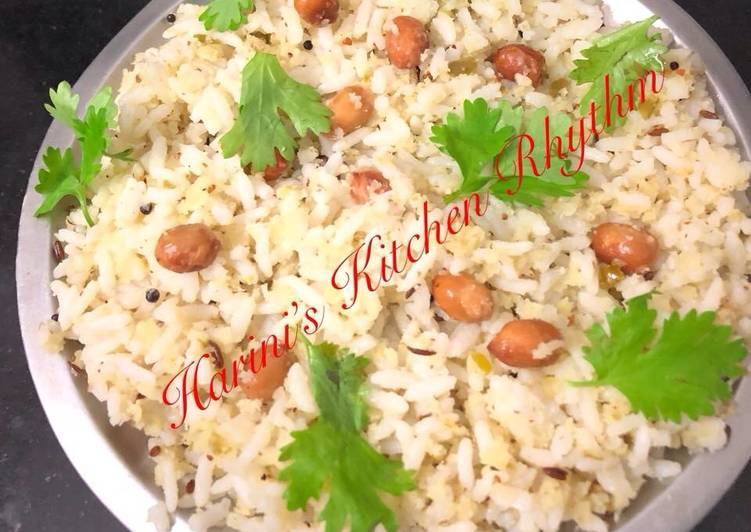
Hey everyone, hope you are having an amazing day today. Today, we’re going to make a distinctive dish, gooseberry chitrannam. It is one of my favorites. This time, I’m gonna make it a little bit tasty. This will be really delicious.
Gooseberry chitrannam is one of the most favored of recent trending meals in the world. It is appreciated by millions every day. It’s simple, it’s fast, it tastes delicious. They are nice and they look wonderful. Gooseberry chitrannam is something that I’ve loved my whole life.
Gooseberry is a fruit that has been popularized by its usefulness in creating AMLA powder. Learn all about Gooseberries at the Gardening Advice Center at Burpee.com. Read about how to grow Gooseberry, its health benefits, and the historical background of the Gooseberry fruit at Burpee Seeds.
To begin with this particular recipe, we have to first prepare a few ingredients. You can cook gooseberry chitrannam using 11 ingredients and 6 steps. Here is how you cook that.
The ingredients needed to make Gooseberry chitrannam:
- Prepare 2 cups cooked rice
- Take 4 big gooseberries
- Take 5 green chillies
- Take 1 tbsp Chopped coriander
- Get 1/2 tsp Mustard
- Take 1/2 tsp Jeera
- Make ready as needed Groundnuts
- Make ready pinch Hing
- Prepare as needed Oil
- Make ready to taste Salt
- Get as needed Kopra
Ribes grossularia), is a species of Ribes (which also includes the currants). It is native to Europe, the Caucasus and northern Africa. The species is also sparingly naturalized in scattered. The cape gooseberry goes by many names, ground cherry and goldenberry being the most common.
Instructions to make Gooseberry chitrannam:
- Grind gooseberry, green chillies, coriander, mustard and kopra into fine paste…
- ..like this
- Heat two spoon of groundnut oil add mustard, jeera, groundnuts and fry, add hing
- Add the ground masala and saute. Add one small spoon salt
- Add cooked rice and mix
- Dish out and serve
It is part of the family called physalis, a nightshade relative of the tomato and some other ground-growing berries. Its origins are not well known, though it is native to several places, including Peru, Chile, and South Africa. Then, plant the clipping outdoors in nutrient-rich, well-draining soil, making sure the hole is deeper and wider than the roots. After you plant your gooseberry clipping, water it daily and wait until mid-summer to harvest it. Cape gooseberries are of no relation to the common gooseberry and are actually a close relative of the tomato and other members of the nightshade family.
So that’s going to wrap this up with this exceptional food gooseberry chitrannam recipe. Thanks so much for reading. I am confident you can make this at home. There’s gonna be more interesting food at home recipes coming up. Remember to bookmark this page on your browser, and share it to your family, colleague and friends. Thanks again for reading. Go on get cooking!